Lectures in the field and the use of social media
Lectures in the field and the use of social media as a learning tool
 The classes I taught today consisted of students from the woodwork and construction classes, so the compilation was very appropriate for study. I was able to present material and connect with all the learning levels from 9th through 12th grade. The interesting part is that all the images were stored on Facebook. I was able to use Facebook as the source from which to deliver the subject material – all 500 images.
Students who have never experienced the process of a house being constructed from the ground up had the opportunity to see each step, each nail, each door, each electrical outlet added at different construction intervals. For those students who had already gone through the process of building a house, it provided them with a great refresher and a challenge to remember the terminology and sweat equity of their hard labor.
Your Classroom
How many shop teachers use Facebook as a learning tool in a shop class? I hope a number of them have discovered its many uses in the classroom and out. Below is a picture of what could be – your classroom.
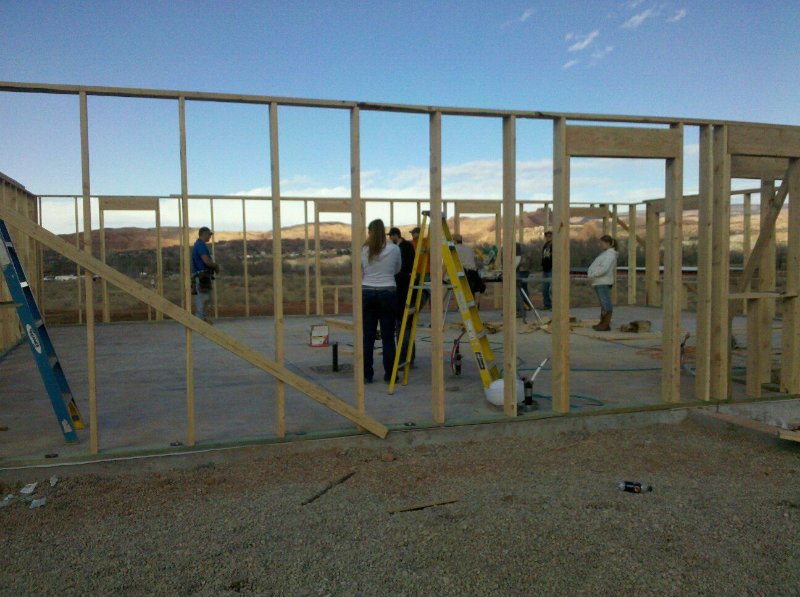
I understand that many teachers frown on the use of Facebook, Snapchat, Instagram, TikTok, “X” formerly Twitter, etc. I understand where you are coming from. For myself, I have learned to embrace social media as a long-term teaching tool. With Facebook or Google Drive, or any of the storage sites, I can create a storehouse of information where I can retrieve data at any time or anywhere. I can pull up information on my cell phone (or iPad) and have a full lesson plan that will help me in the field. A lesson plan complete with diagrams, charts, measurements, notes, and more.
Since many students are already comfortable with the Facebook platform and other social media platforms, they will tend to be more receptive to your online lectures that have visual content. Social media is something they recognize and feel comfortable with using. There isn’t a heavy learning curve – it just isn’t there.
Self-lead learning
I am very open to the self-led learning environment, and therefore, assuming the role of a teacher guide. An open classroom experience helps challenge students to come up with their own solutions and better prepare them to participate in different group settings and changing environments.
In this scenario and others, never would I would never suggest replacing the construction teacher/contractor. They are a necessary component to working on a job site of this magnitude. Their skills, their background, and legal knowledge are invaluable to the learning process. Construction, after all, is a hands-on process.
What I am suggesting is that teaching construction students to use social media for collaborating on upcoming projects in the field – there is nothing wrong with that idea. When you get to the hands-on portion of actually building a structure, it would be nice if students could look at their class website/Facebook page and quickly go over the steps again while in the field. Just have an iPad or a designated cell phone on site to help with research. Research in the field goes along well with hands-on experience.
EXAMPLE: check out Granite’s construction class and the use of technology in the field.
CTE – Woodworking
Research in the field goes along well with hands-on experience
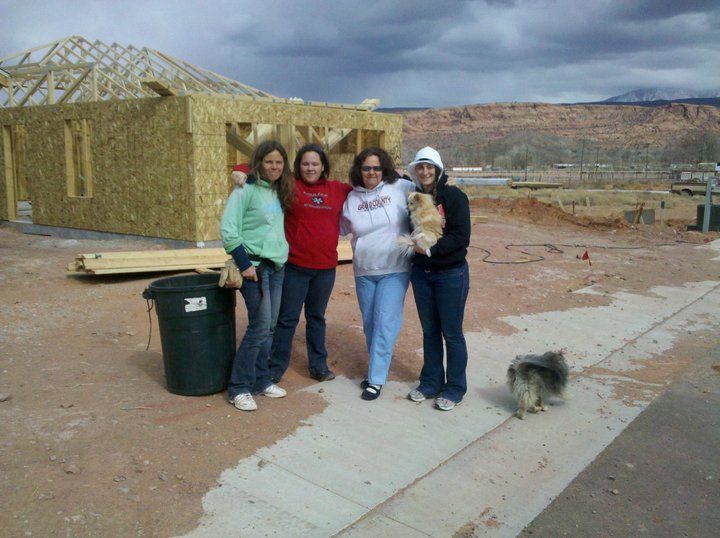
Flipping the classroom from traditional to open and incorporating technology is not as hard as one might think. Just as asking a group of women to build a house is not hard either. Ladies do it all the time – we did! We used our phones for measurements, looking over blueprints, learning about electricity, plumbing, setting tiles, collaborating on daycare times, and of course – ordering pizza for the crew. Technology is already at your construction sites – it’s all in how you use it.
The use of technology inside and outside of the classroom can kick the learning curve up a notch for a lot of students. Technology is the place that your kids are receiving a large chunk of their education from, anyway. They get the good, the bad, and the ugly – it is all online.
They get the good, the bad, and the ugly – it is all online.
I have dabbled with “X”, formerly Twitter, in the classroom, and participated in a fair share of Facebook forums, constructed and managed other people’s sites, as well as developed and monitored my own sites. I have also developed and built my own instructor (Canvas) websites, complete with full curricula. This type of work just comes with the turf naturally as an educator; you either know this stuff or you do not. But you need to know it, and you need to be diverse enough to help those digital learners who come to you for help. Your students are already online, and many are just waiting for their teachers to catch up.
I understand that someone on the roof of my house shouldn’t be using their cell phones to call their friends or play games up there. The sad part is – I have seen people do that – grown men, actually. In those situations, just ask the student to leave the job site. My class – my rules! Goodbye.
My class – my rules!
Goodbye
I find that several teachers who lack technology skills struggle in maintaining a classroom indoors as well as outdoors. It is not because they aren’t good teachers. They are very good teachers. They struggle because the cell phone habits of students have already taken a strong hold within the classroom setting.
I do not know the answer to the cell phone problem – that is the million-dollar question. I have a cell phone problem myself. Cell phones are addictive little tools, but I have given up trying to police cell phones in the classroom. Especially if it is not my class that I’m instructing. I do have the philosophy that if I can’t beat them, join them. I’m learning to incorporate the use of cell phones in the classroom. Think about it. If their cell phones become related to real work, they are going to back off from them. Experiment with that.
Cell phones are addictive little tools, but I have given up trying to police cell phones in the classroom.
I use my cell phone for everything, so do your students. I even finished an entire semester using nothing but my cell phone while in college. Technological education is not new. As long as technology has been around, it shouldn’t be new to any of you who teach, either. It’s not going to go away any day soon, so you might as well learn it, unless you are preparing to leave the profession.
Here is the real challenge with technology, and as an educator, this thought might surprise you. It’s that dazed feeling you get from the fact that you have not already put together something similar to a Facebook page yourself, listing some of the better educational material you have collected over the past nine, fifteen, or twenty years or so. I am referring to the kind of educational material that really turns the Big Idea on in the minds of your students.
I am referring to the kind of educational material that really turns the Big Idea on in the minds of your students.
Not collecting all the research was a serious missed opportunity on my own part, which I need to fix. I have had some great opportunities in the past to review some of the best technology tools out there. I think that anyone who is in the field of education owes it to the students of today and tomorrow to collect and house that data for whatever value it might hold. Be that data in construction, cosmetology, finance, design, mathematics, and every subject in between. It is that one kid that might need that information – that makes it worth saving. Collect it now, because you “will” need it in the future.
Collect it now, because you “will” need it in the future.

I am probably preaching to the choir when I say, “As an educator, you have to use all the tools available to you. Every tool is a scaffolding tool if it helps teach a lesson. You have to go where your students are, and you have to teach at a level they will understand.”
Classrooms without walls, I wish that for every student. Technology can take them there.
UPDATE: For those parents who might be struggling with their teens’ Facebook comments and time spent online, you may wish to check out the Smart Parent Guide that is available at Amazon. Written by Meagan Butler-Hannon, she offers some great tips on helping parents and students constructively use Facebook. Having those conversations with your teen is important. Meagan also has a Facebook page that offers some valuable tips on how you can collaborate with your teen about the issue of social media


You May Also Like

Phone etiquette 2.0. Meh!
Cramming for that exam!